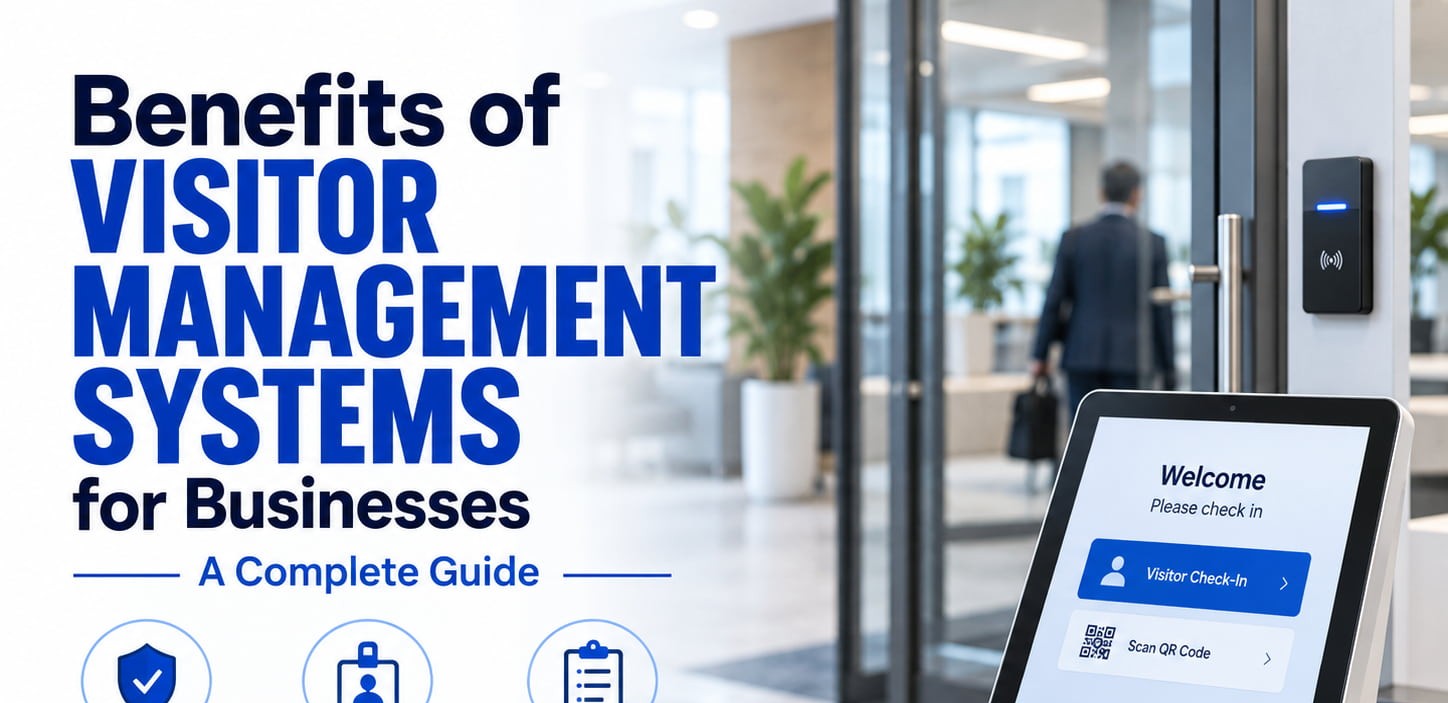

A visitor management system gives a business a structured way to handle temporary access without turning every arrival into a front-desk judgment call. It can connect an expected guest with a host, purpose, entry point, permitted area, and departure time. For offices, commercial properties, plants, healthcare sites, schools, and multi-tenant buildings, that creates a clearer operating process than handwritten records or disconnected messages.
Manual registration often breaks down at the edges: a contractor arrives early, a delivery is sent to the wrong door, or a host cannot be reached. Digital visitor management helps staff follow an agreed process even when the visit does not go exactly as planned.
What Is a Visitor Management System?
This type of software organizes access by people who are not permanent credential holders. It can support pre-registration, digital check-in, visitor registration, visitor logs, badges or temporary credentials, and host notifications.
The workflow usually begins with a reason for entry. A meeting, service call, interview, inspection, or delivery is linked to the person responsible for it. When the guest arrives, reception or a self-service point confirms the visit and records the arrival. The platform can then trigger the next approved step.
A visitor registration system may apply different rules by visit type. A job candidate might be directed to reception and a meeting room. A maintenance technician may need a service corridor and one equipment area. A courier may remain at a designated handoff point.
That distinction is important because access should follow the task, not simply the fact that someone has entered the building.
Visitor management software does not replace doors, guards, cameras, alarms, or emergency procedures. It adds organization around temporary entry and helps those controls work with better context.
Key Benefits of Visitor Management Systems
The strongest visitor management system benefits come from making temporary access easier to understand, review, and manage.
| Benefit | How It Helps Businesses |
| Improved security | Links temporary entry to a defined purpose, person, and access scope |
| Faster check-in | Reduces repeated front-desk work when visit details are prepared in advance |
| Better tracking | Creates a clearer history of arrivals, active visits, and departures |
| Reporting | Gives authorized teams usable records for later review |
| Emergency support | Provides an additional reference for registered non-employees on-site |
| Integrations | Allows entry data to support other security and building systems |
One of the most useful benefits of visitor management system technology is that it separates approval to enter from permission to move freely. A person can be expected at the property while still being limited to specific doors, floors, or time windows.
That supports workplace security without overstating what the software can do. A system can help reduce uncertainty and support access decisions, but it cannot guarantee security or prevent every unauthorized action.
A visitor check-in system can also reduce reception friction. If the visit already exists in the platform, staff can confirm the arrival instead of reconstructing the appointment from email, phone calls, or memory.
Another of the visitor management system benefits is better record quality. A facilities team may later need to confirm when a service company attended, which employee hosted a meeting, or whether a temporary credential should still be active. Structured records make those questions easier to answer.
The same information can support emergency procedures. If a facility is being evacuated, active records may help staff identify registered guests or contractors who have not yet checked out. This information should support established emergency processes, not replace them.
Visitor management systems can also help organizations keep a consistent operating model across several locations. Each property may still use different entrances, approval rules, or access zones, but the underlying process can remain familiar to staff.
Visitor Management System Integrations
The platform becomes more valuable when it exchanges useful information with the systems already controlling the property.
An access control system can use approved visit data to issue a temporary credential with a defined start time, end time, and door scope. This makes visitor access control more precise than handing out a generic card that works across a wider area than necessary.
Video surveillance can provide another layer of context. If security staff need to review an incident, an arrival or departure record can help narrow the relevant time period.
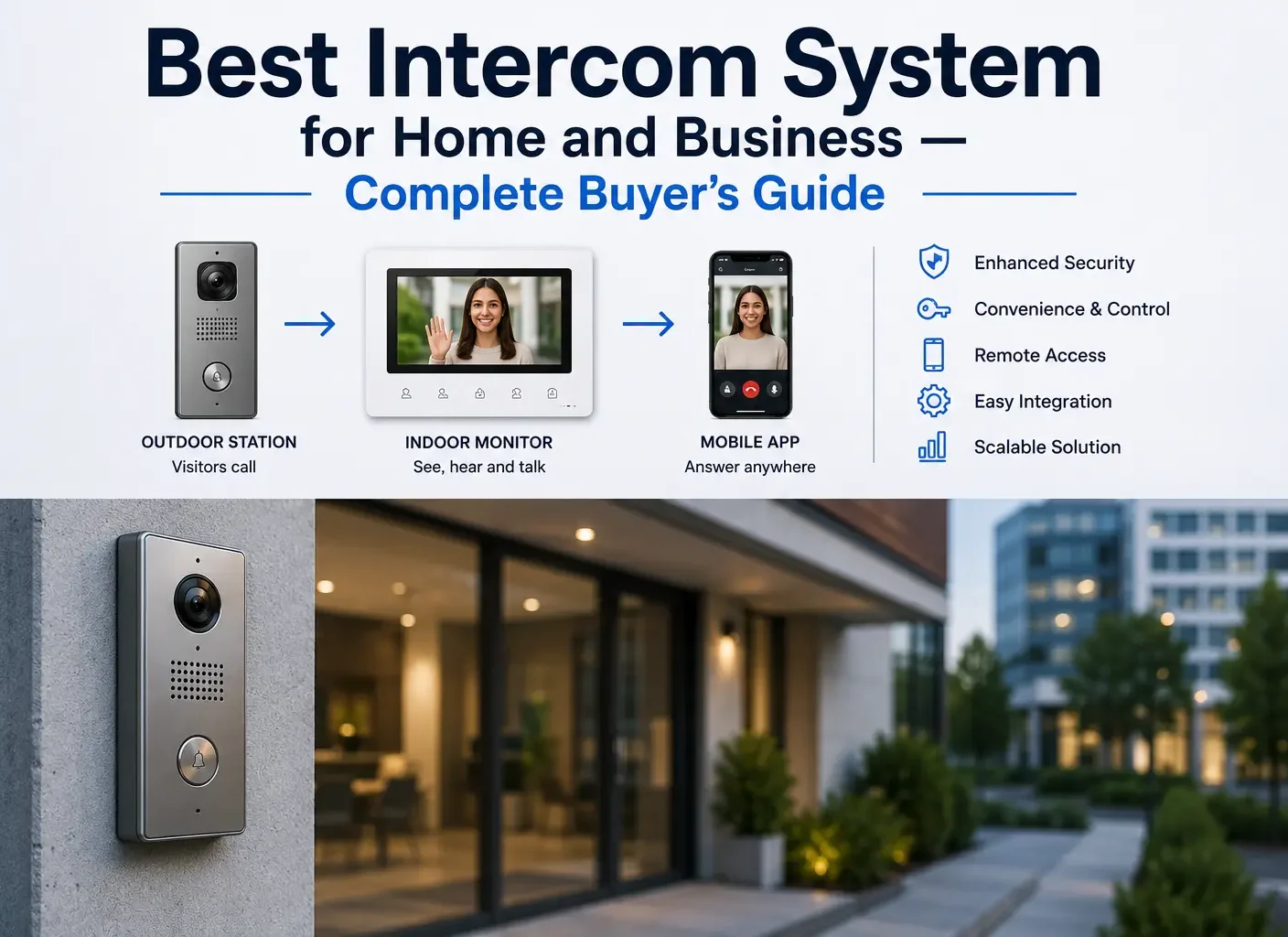
Intercoms are useful where a controlled entrance sits before reception. Staff can establish why the person is there and decide whether to direct them to check-in, contact the host, or refuse entry.
Alarm systems may provide event information that can be compared with access activity. Employee directories can keep host details current so notifications reach the correct person.
Good security system integration should remove unnecessary handoffs, not create more administration. The goal is to make existing physical security tools work together around the visit.
Who Can Benefit from Visitor Management Systems?
Visitor management systems are useful where external traffic has operational or security consequences.
- Offices: clients, candidates, consultants, contractors, and deliveries may all follow different routes.
- Commercial buildings: reception may need to coordinate with multiple tenants and shared entrances.
- Manufacturing facilities: outside workers may require controlled access to technical, loading, or production areas.
- Healthcare facilities: vendors, contractors, and other non-staff arrivals may need site-specific entry procedures.
- Educational institutions: parents, suppliers, tradespeople, and scheduled professionals may require different handling.
- Multi-tenant properties: building-level entry can be managed separately from tenant-level permissions.
The deciding factor is not simply headcount. A site with ten complex service visits may need more control than a site with fifty routine meetings.
How to Choose a Visitor Management System
Start with the property and the decisions staff already make. Which arrivals require approval? Which areas should remain off-limits? Who can authorize an exception? When should temporary access end?
| Factor | Questions to Consider |
| Security requirements | What must be confirmed before temporary access is granted? |
| Integrations | Which existing systems need to exchange information with the platform? |
| Visitor volume | Can the process remain efficient during busy periods? |
| Reporting | Can authorized users retrieve the records they are likely to need later? |
| Usability | Is the workflow clear for guests, hosts, and reception staff? |
| Scalability | Can the same process support more entrances, users, or locations over time? |
Then test the awkward cases. What is the fallback if the network is unavailable? Can a credential expire automatically? Who can extend a visit? How is an unattended arrival handled?
Those questions are often more useful than comparing feature lists. The best fit is the platform that matches the building, staffing model, visitor flow, reporting needs, and existing technology infrastructure.
Conclusion
Visitor management works best when temporary entry is treated as a defined business process, not a reception formality. It can improve visibility, support building security, and make it easier to connect a guest with the purpose, host, location, and duration of a visit.
Used as one layer of a wider physical security strategy, the technology can help businesses manage external access more consistently while supporting the systems and procedures already in place.