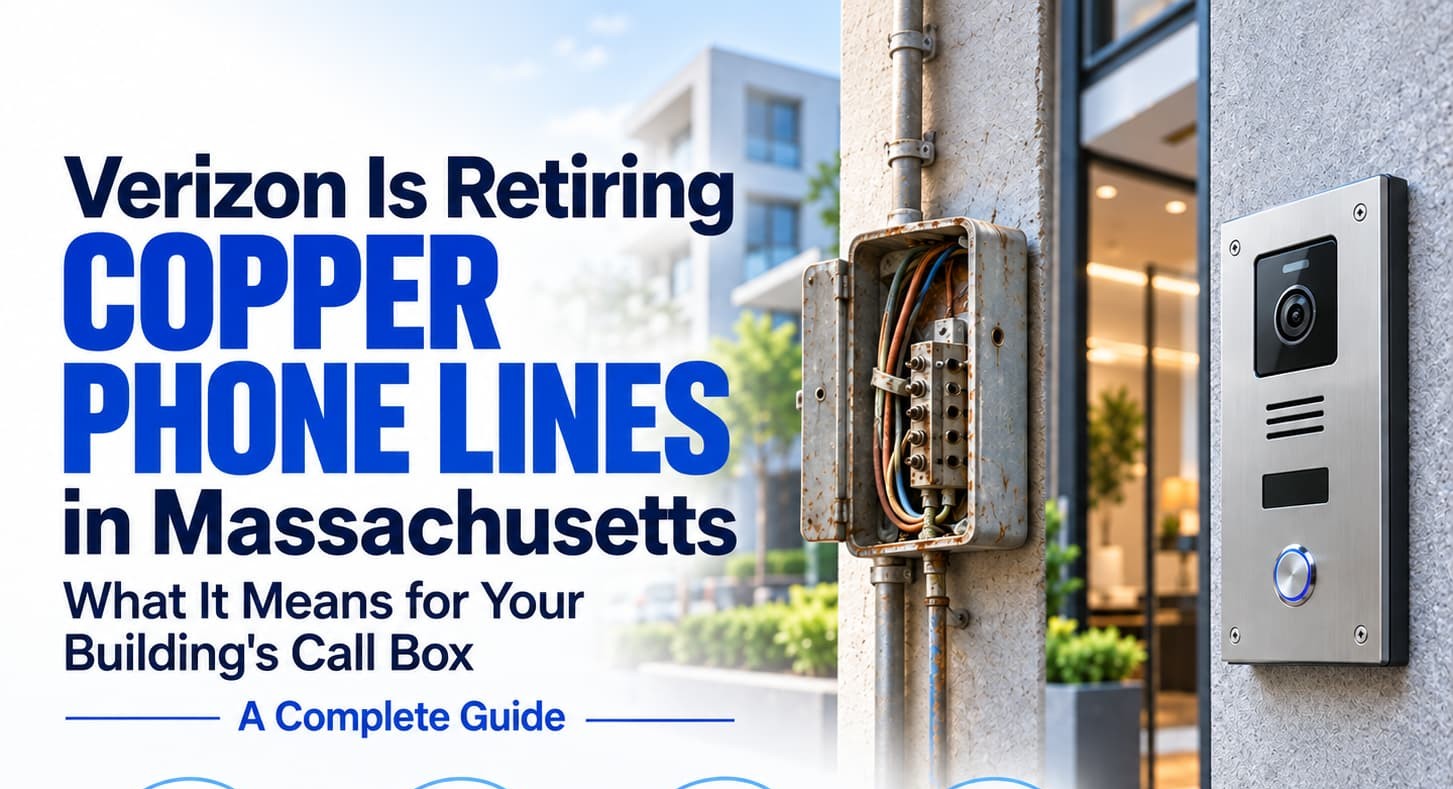

Verizon is moving parts of its Massachusetts voice network away from legacy copper phone lines. For owners and managers, the first question is not “Do we need a new intercom?” but “What equipment here still depends on that service?” A building call box, elevator phone, alarm communicator, or gate controller may use a legacy connection.
Why Are Copper Phone Lines Being Retired?
POTS, short for Plain Old Telephone Service, was built around analog voice carried over copper pairs. For years, those circuits did more than support desk phones. They also gave many building devices a simple way to dial out, receive tones, or reach an off-site destination.
Some Massachusetts Verizon customers are now being moved from copper facilities to fiber-based service. The Verizon copper retirement is therefore best understood as a change in the carrier network, not as a blanket verdict on every device attached to it.
Newer communication infrastructure can use fiber, IP transport, cellular networks, or a combination of technologies. The practical issue for a property is whether the connected equipment expects electrical, signaling, or backup-power behavior associated with copper phone lines.
That is why a POTS line replacement should begin with a dependency check. Before anyone orders hardware, identify what uses the line and what that device needs in order to communicate.
How Does a Building Call Box Use a Phone Line?
A building call box sits at the boundary between a public entrance and a controlled interior. In a traditional telephone entry system, the panel creates a call to a resident, tenant, front desk, or other authorized recipient.
The sequence is usually simple:
- the guest chooses a name, unit, or directory entry;
- the controller places or routes a call;
- the recipient speaks with the guest;
- an approved command activates the door or gate release.
The important detail is hidden behind the user experience. A resident may answer on a mobile phone while the controller still originates that call through an analog service.
For this reason, an apartment call box should be inspected from the controller outward. The panel face can look modern while the communication path behind it is decades old. Useful evidence includes the model number, dialer settings, service number, wiring route, relay interface, and any device installed between the controller and the carrier connection.
A call box system can appear normal until the communication path changes.
What Happens If Your Call Box Still Uses a Copper Line?
There is no universal result. One telephone entry system may work after migration with little more than verification. Another may need an interface, new communicator, programming change, or wider replacement.
The goal is to discover that before the old service is altered. Property managers should document the current setup while it is still operating, then evaluate the new service against the actual hardware.
How Copper Retirement Can Affect Building Systems
| Building System | Possible Impact |
| Telephone entry systems | Communication path may need adaptation, testing, or replacement |
| Gate call boxes | Existing carrier service may need a different connection method |
| Elevator phones | Voice path, standby power, and signaling should be reviewed |
| Alarm systems | Off-site communication may need separate compatibility testing |
| Legacy analog devices | Continued operation should be confirmed before migration |
This is where copper network retirement becomes a building-management issue rather than a telecom-only issue. A single account may support more than one device, so changing a line without tracing its uses can create avoidable problems.
Options for Replacing a Copper-Based Call Box Connection
Copper phone line replacement does not automatically mean replacing the entire entrance. The scope can be narrow, moderate, or complete depending on what is already installed.
Possible routes include:
- Cellular communication. A compatible communicator can send calls over a cellular network where coverage and hardware support that approach.
- IP or network connection. Some controllers can use the property’s data network or internet service instead of an analog circuit.
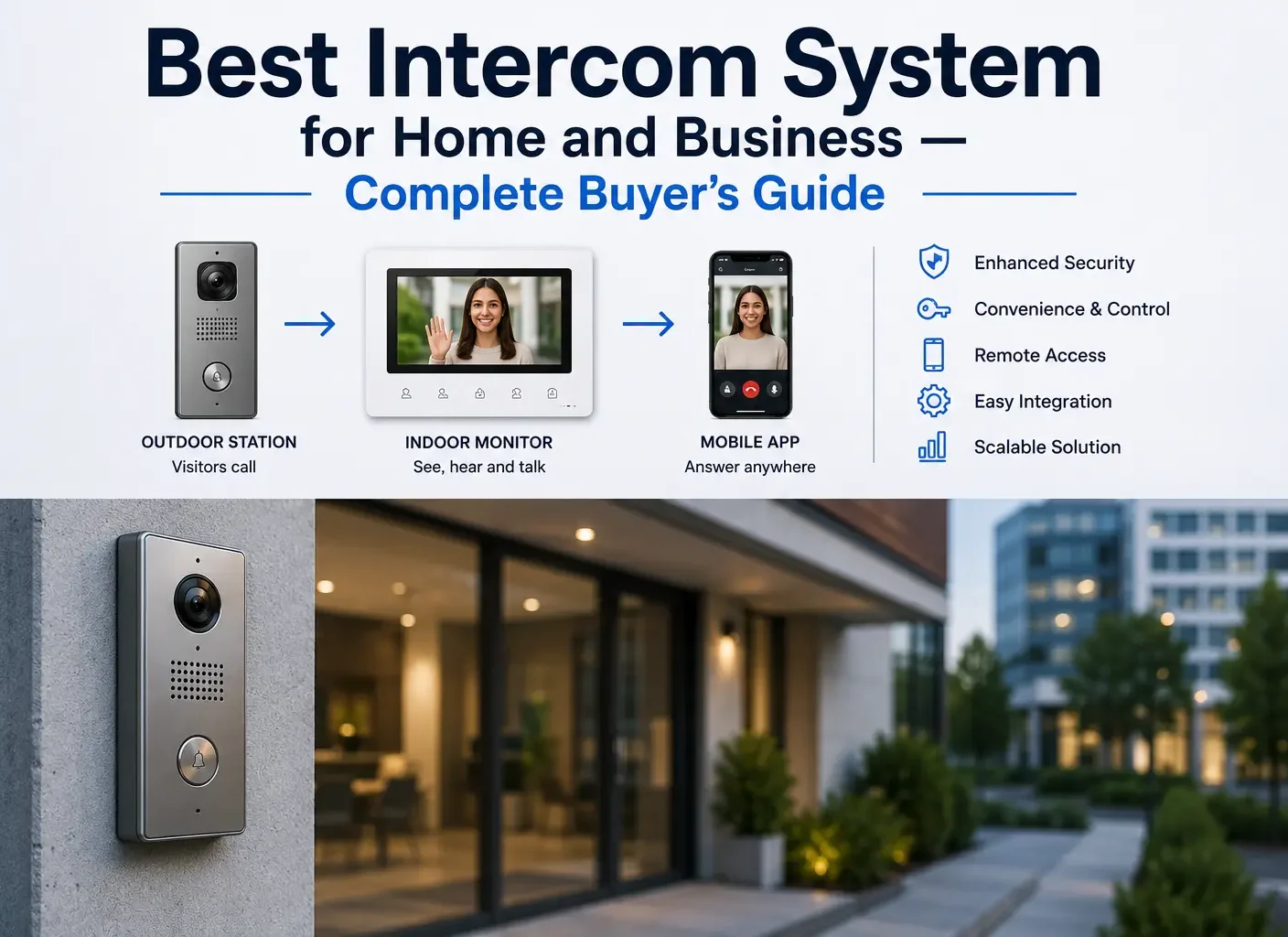
- Video intercom system. A property that wants visual verification can use the migration as a reason to add video and newer management tools.
- Full entry-system upgrade. If the controller is difficult to support, lacks parts, or has limited integration options, a complete replacement may be more practical than preserving it.
The best option depends on the building. A small condominium, gated complex, and multi-tenant property have different priorities.
A copper phone line replacement plan should consider controller age, available cabling, number of entrances, network service, desired features, tenant workflow, and future building access control needs.
It should also consider what the new path depends on. If communication now relies on local power, network hardware, or cellular coverage, those dependencies belong in the design discussion.
Why Building Owners Should Review Their Entry System Before the Transition
A useful review starts with the equipment itself. Locate the controller, record the make and model, identify the telephone service connected to it, and note any adapters, relays, power supplies, or adjacent panels.
Next, trace the complete action chain. What initiates the call? Where does it go? What signal releases the entrance? Does the call box system make that decision itself, or does another access-control device participate?
Questions to Ask Before Upgrading a Call Box System
| Question | Why It Matters |
| Does the system rely on a copper phone line? | Shows whether the network change is relevant to that device |
| How old is the current equipment? | Helps determine whether adaptation is realistic |
| How many entrances use the system? | Defines project scale and coordination needs |
| Is video or mobile access needed? | Separates essential migration work from optional upgrades |
| Can the system integrate with access control? | Shows whether the project can support later expansion |
This review helps property owners prepare before a carrier appointment turns into an equipment problem. It also makes contractor proposals easier to compare because everyone is working from the same documented starting point.
Planning ahead gives managers room to coordinate residents, tenants, testing, and any scheduled outage before communication is disrupted.
Modern Call Box Systems and Building Access Control
A modern building call box can be one component in a larger entrance design. Communication handles the conversation. Access control decides whether a credential or release command is valid. Door hardware performs the physical action.
Newer platforms may support video intercom, mobile credentials, remote administration, and cloud-based management. Those functions can be useful, but they should be added because the property needs them, not simply because copper phone lines are being retired.
For a property already reviewing commercial building security or property management security, the project may also be a good point to examine cameras, credentials, a gate entry system, locking hardware, and other low voltage systems together.
The Verizon copper retirement may start the conversation, but it should not dictate the final design. The existing telephone entry system, building layout, budget, and future operating needs should determine how far the project goes.
Conclusion
The move away from some copper phone lines in Massachusetts is a telecommunications change with building-level consequences only where equipment depends on that service. The correct response is to trace the dependency before choosing the solution.
Owners do not need to assume that every legacy device must be replaced. They do need to know what their equipment uses today. A documented review supports a planned migration, keeps the scope proportionate, and allows the property to modernize without turning a network change into an avoidable emergency.