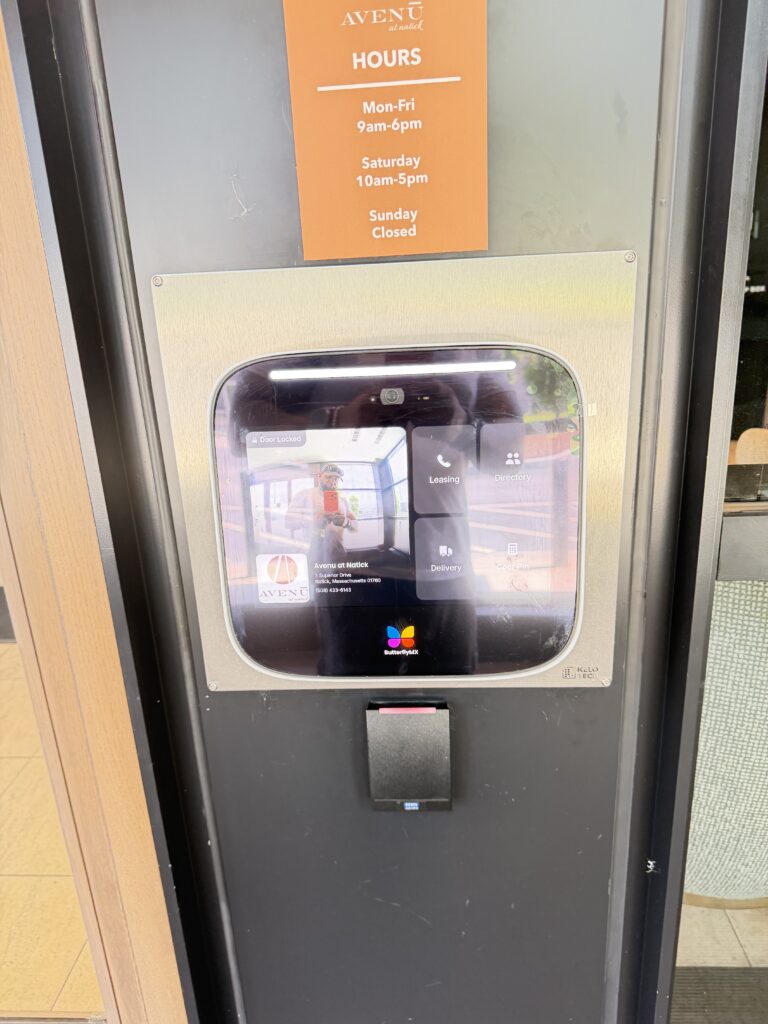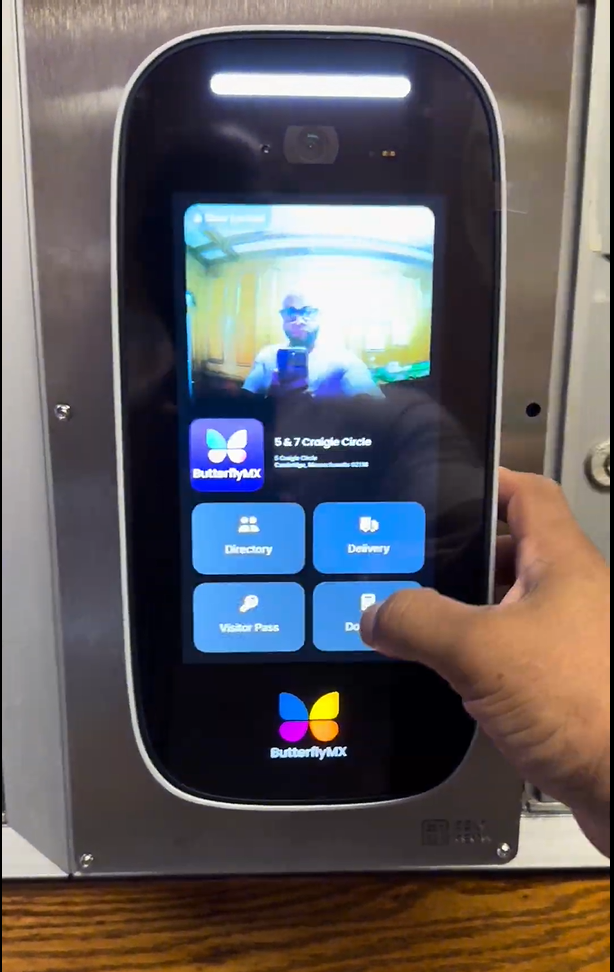
We install elevator access control systems that restrict floor-level entry to authorized users. Our team manages reader installation, controller configuration, and integration with building access infrastructure to deliver secure vertical access management across residential and commercial properties.
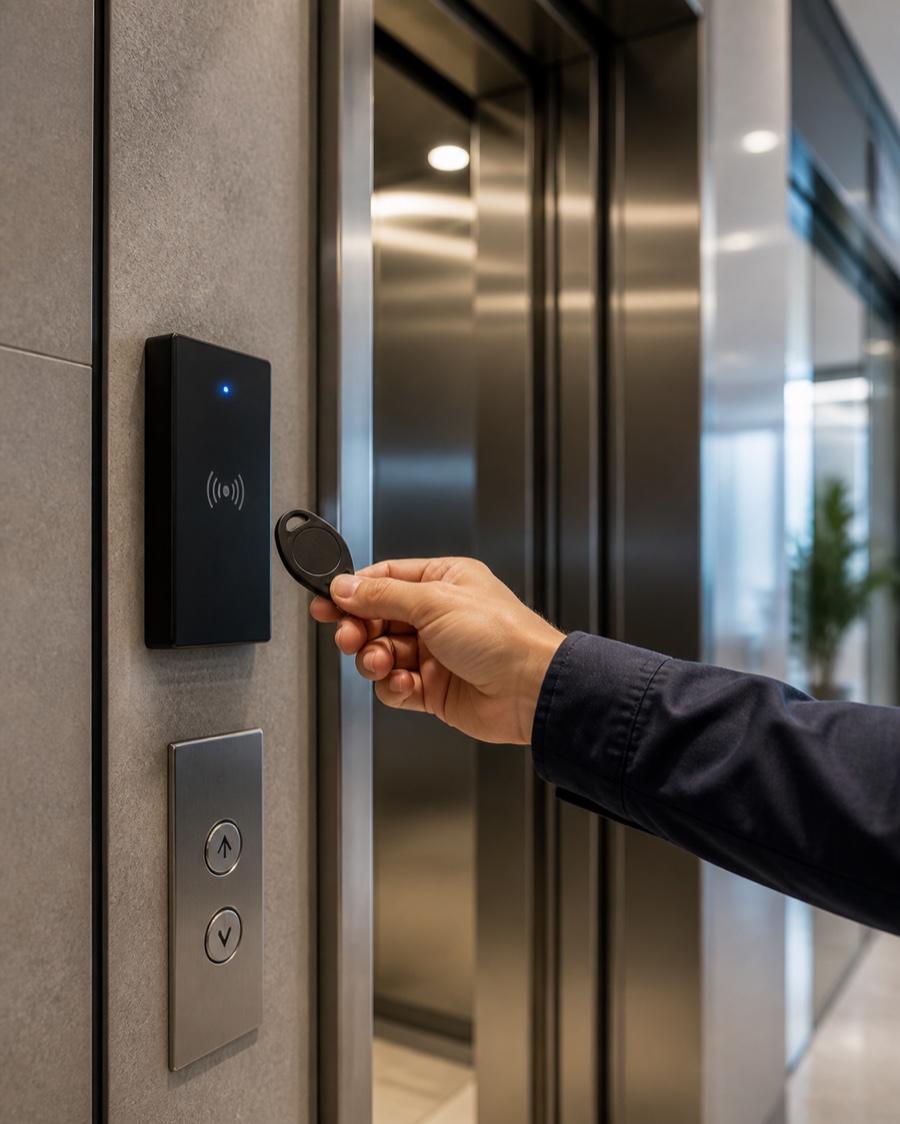
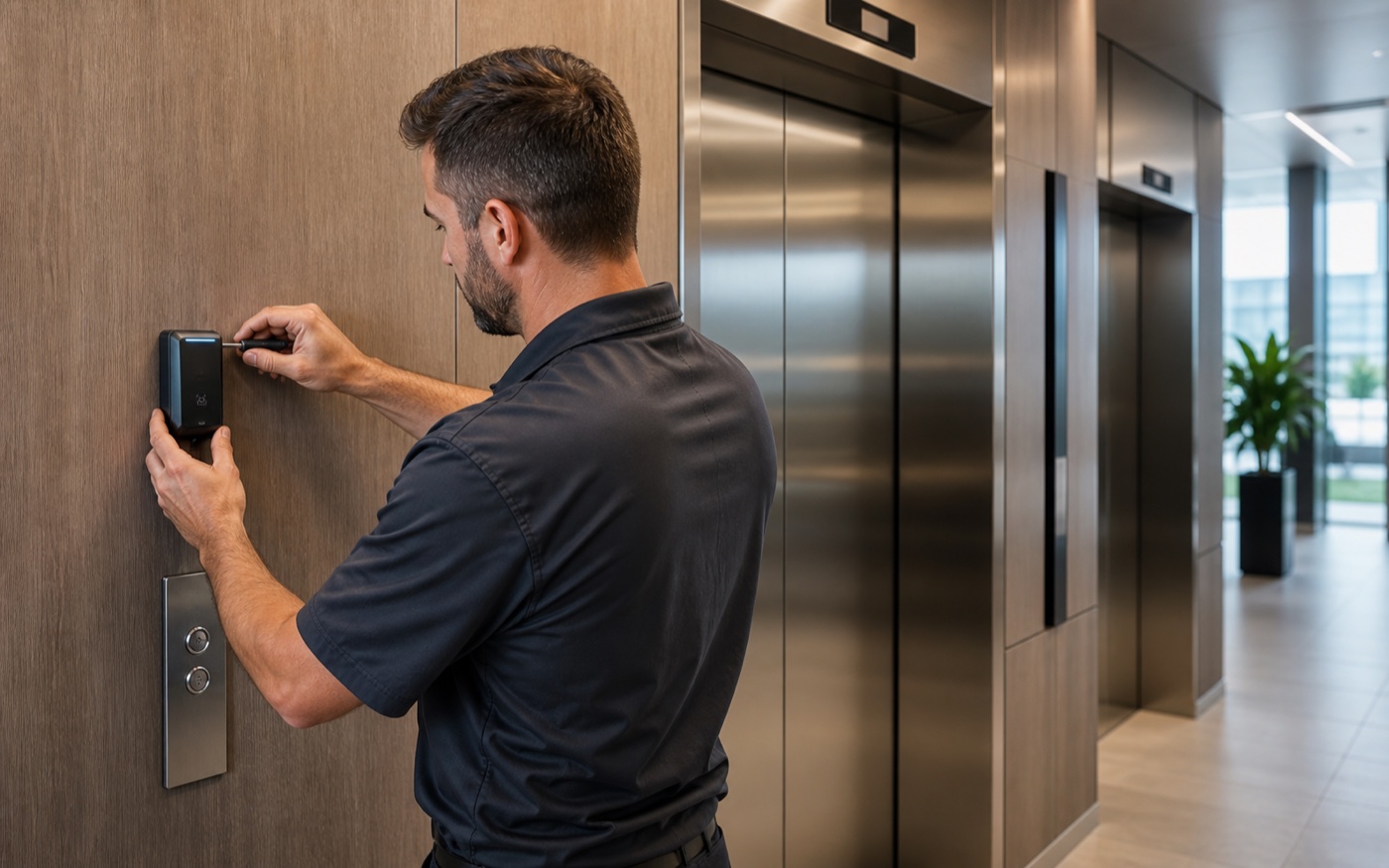
Controlling who can access specific floors is a critical component of building security. Elevator access control systems limit floor-level movement to credentialed users, preventing unauthorized access to residential units, private offices, and restricted areas without disrupting normal building flow.
We design and install elevator control solutions that work within your existing cab wiring, controller panels, and access control platforms. Our technicians assess your elevator infrastructure, identify integration points, and configure readers or relay modules that activate floor access based on assigned credential permissions.
User access is programmed by floor group, time schedule, and credential type — supporting key cards, fobs, or mobile credentials depending on your system architecture. Elevator control integrates directly with lobby intercoms, building access control systems, and visitor management workflows for centralized oversight. We handle all low-voltage cabling, panel connections, and system testing to confirm correct operation on every configured floor.

We review your objectives, property requirements, and security priorities to understand your project scope.

Assessment A qualified technician conducts a detailed evaluation of your property, infrastructure, and system layout.

We prepare a tailored proposal outlining recommended solutions, system specifications, and project scope.

Our team completes the installation with precision, ensuring proper wiring, configuration, and system performance.
Fast, straightforward quoting with clear scope and pricing. We assess your needs and deliver a reliable estimate without unnecessary delays.
View Our Completed Projects
Elevator control systems regulate which floors occupants may access within multi-level properties. A properly engineered access framework strengthens internal building security, sets clear movement boundaries, and integrates authorization logic with broader infrastructure while preserving efficient daily circulation.
Modern buildings operate as layered environments. Entry credentials, restricted departments, tenant divisions, service routes, and executive areas require structured governance of movement between levels. Without defined authorization rules, unrestricted cabin selection increases exposure risk, weakens tenant separation, and complicates accountability. Credential-based floor permissions create predictable vertical access without slowing legitimate mobility, improving privacy and operational clarity across residential and commercial properties.
Advanced elevator control systems introduce a verification layer between occupants and vertical transport hardware. Instead of open cabin button selection, access to designated levels follows credential authentication.
A structured authorization framework typically includes:
When elevator control integrates properly with entry systems and monitoring infrastructure, it reinforces a unified building security strategy rather than operating independently. Design should reflect real traffic behavior. A residential tower experiences concentrated morning peaks, while a corporate campus may distribute movement throughout the day. Authorization mapping should align with those patterns to maintain efficiency without sacrificing defined boundaries.
Residential elevator control is widely implemented in condominiums, apartment complexes, and private multi-level residences. The objective is privacy without inconvenience.
Typical residential applications include:
In residential environments, simplicity enhances reliability. Excessive hierarchy often creates unnecessary maintenance calls and inconsistent user habits.
Planning considerations include:
A well-designed elevator control solution enhances resident confidence while preserving convenience. Permissions should be adjustable as occupancy changes, without replacing infrastructure.
Commercial elevator control systems operate in high-density environments such as office towers, healthcare facilities, hotels, and corporate campuses. Typical commercial requirements include:
In commercial properties, vertical circulation directly affects productivity. Authorization must protect defined areas while supporting smooth movement. Pre-deployment evaluation often includes traffic pattern analysis, credential hierarchy mapping, integration review with building entry systems, and a low voltage installation assessment.
A well-calibrated elevator control framework maintains structured access without compromising operational flow. Documentation also matters: a security log supports audits, incident review, and accountability.
Electronic elevator management connects vertical authorization with alarm and entry systems. Integration elements may include:
When elevator control aligns with other systems, oversight improves and unauthorized movement is easier to identify. Redundancy planning strengthens reliability: clear fallback behavior and documented recovery steps reduce disruption during temporary outages.
Each property requires a tailored elevator control solution. Residential towers, mixed-use developments, and corporate facilities differ in user groups, turnover rates, and risk profile. A good design starts with clear questions: who needs access, which levels are sensitive, and how exceptions are handled (guests, vendors, emergency response).
Reliable elevator control solutions for residential buildings emphasize durability and intuitive use. Recommended characteristics include:
Residential environments benefit from clear authorization mapping. A focused elevator control solution reduces long-term service requirements while strengthening security. Lifecycle planning matters: firmware updates and modular hardware enable expansion without structural redesign.
Professional elevator control solutions for commercial spaces must support layered authorization and documentation standards. Key design elements include:
An experienced installer evaluates compatibility between authorization modules and cabin hardware before deployment. Commercial environments should also plan for tenant rotation: onboarding/offboarding must be fast, consistent, and auditable.
Affordable mobility governance can remain effective when implemented thoughtfully. To manage cost responsibly:
An inexpensive elevator control solution should still meet durability and reliability expectations. Predictable budgeting reduces long-term financial uncertainty and avoids “false savings” created by repeated resets or frequent rework.
Long-term stability depends on structured oversight rather than one-time configuration.
Control services support updates, diagnostics, and documentation review. Typical elevator control services include:
These services are particularly valuable during tenant turnover or policy modification. Regular evaluation keeps authorization logic aligned with real-world usage rather than drifting into informal practices.
Certified professionals play a central role in safe deployment. Pre-project assessment typically includes:
A qualified installer ensures elevator control modules integrate reliably with building systems. Selecting an experienced installer reduces configuration instability and avoids avoidable service calls.
Routine maintenance preserves reliability. Service activities may include:
Properties with frequent occupancy change benefit from scheduled review intervals. Consistent oversight helps keep the system predictable for users and manageable for administrators.
Proper configuration directly influences system stability and user experience.
Installation of control systems for residential and commercial properties requires structured planning. Core stages include:
Installation should be verified under realistic usage conditions, not just a basic open/close check. Accurate installation reduces troubleshooting and protects long-term performance.
Local elevator control installation by professional installers enables site-specific evaluation and efficient deployment. Professional installers should:
Choosing a knowledgeable installer strengthens long-term stability and reduces disruption during future changes.
Low voltage equipment ensures reliable communication between authorization modules and vertical transport hardware. Proper wiring supports stable signal transmission, reduced interference, safe energy distribution, and durable operation. Efficient setup includes documentation, labelling, and post-configuration verification.
Strategic planning minimizes unexpected expense and operational disruption.
Elevator control installation cost depends on measurable variables:
| Factor | Impact on Cost |
| Number of floors | Increased configuration effort |
| Credential complexity | Additional programming time |
| Cabin compatibility | Hardware adjustment |
| Wiring condition | Low voltage work increases labor |
| Integration scope | Coordination with building systems |
Cost planning should separate hardware price from labor and ongoing services. A realistic budget also accounts for future changes: tenant turnover, policy updates, and periodic review.
When selecting an installer near me, prioritize documented expertise over lowest price. Checklist:
Cheap installers may reduce initial expense but increase long-term operational risk through incomplete commissioning or inconsistent mapping.
Effective planning includes:
Careful preparation ensures dependable performance and controlled cost over time. The goal is stability: predictable behavior for occupants and repeatable processes for administrators.
Elevator control systems regulate floor authorization in residential and commercial buildings. When supported by structured elevator control services, professional installation, and experienced installers, the solution strengthens building security while preserving efficient vertical movement.
Thoughtful engineering, disciplined configuration, and structured oversight support reliable performance without unnecessary recurring expense.